Last updated October 31, 2026
 Smart locks
 House lockouts
 Re-keying
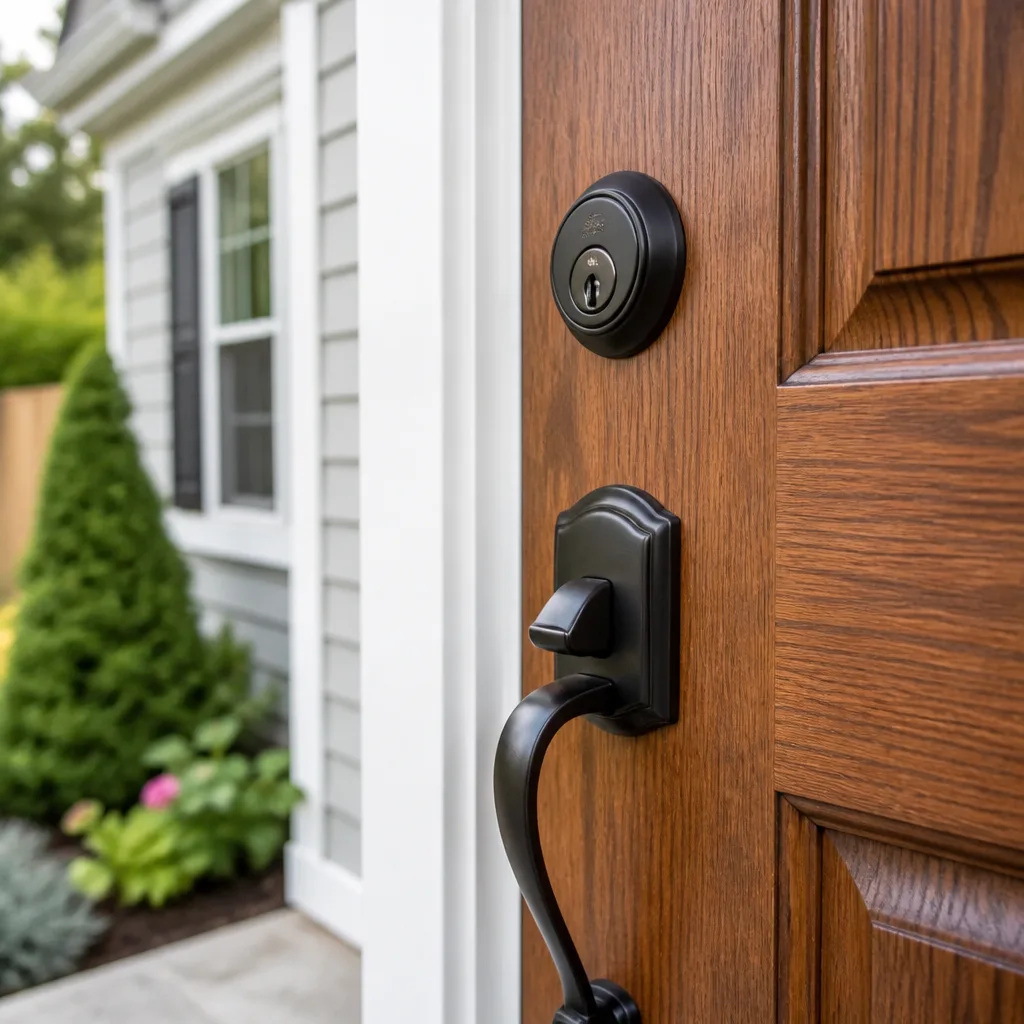 Deadbolt upgrades
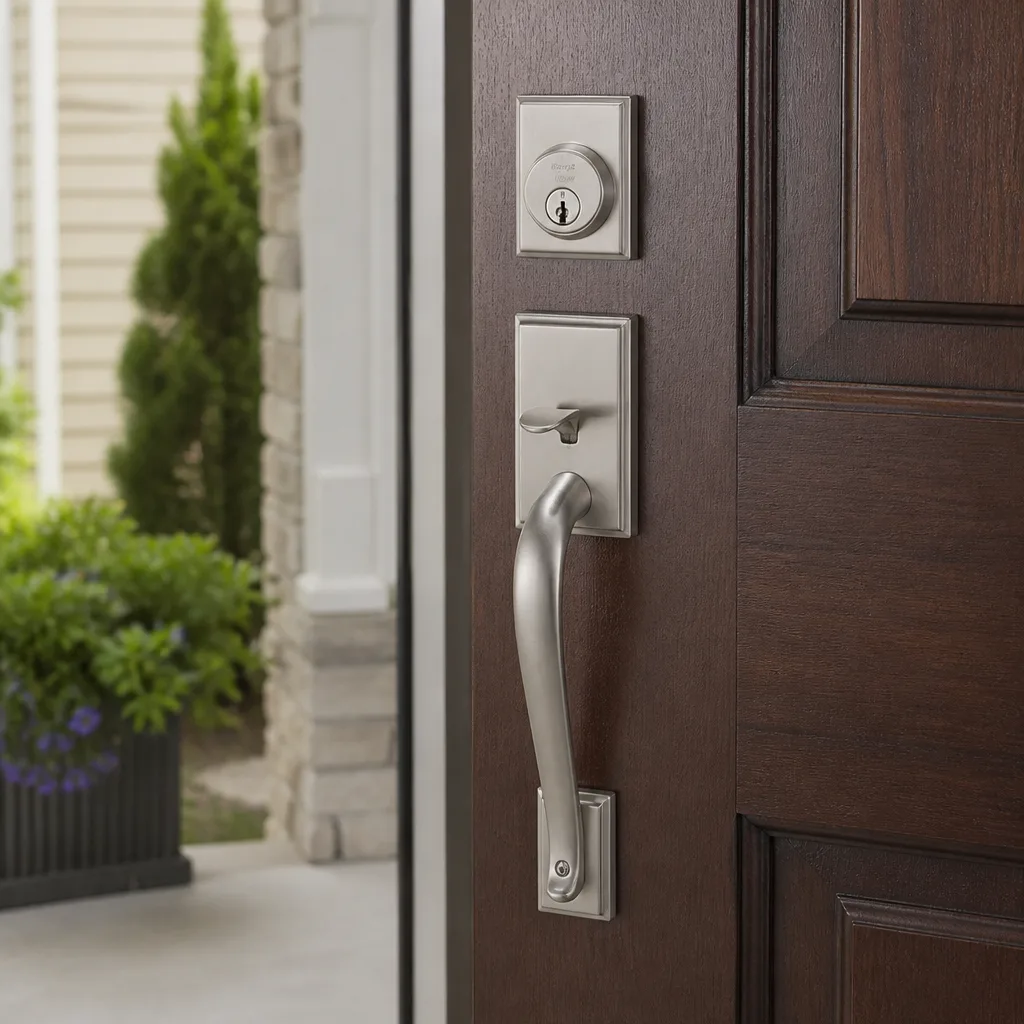 Schlage
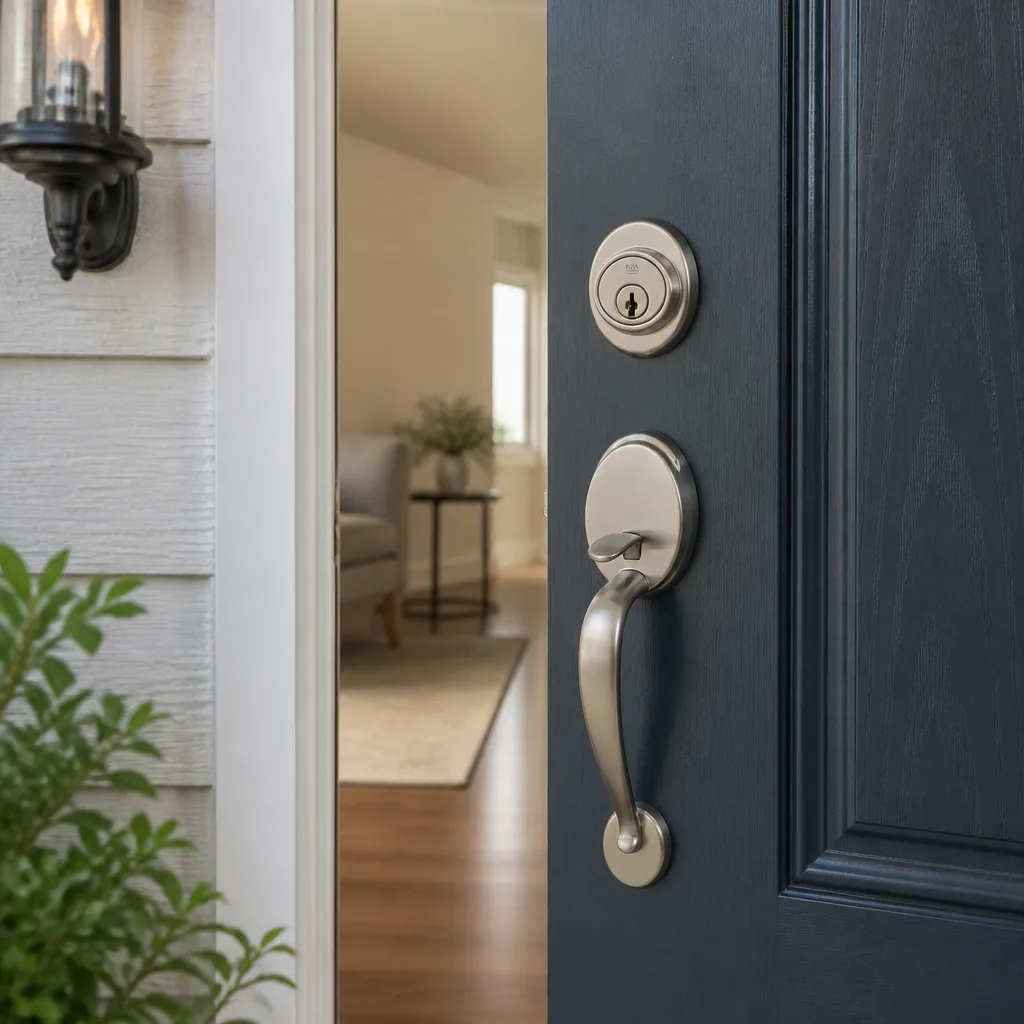 Kwikset
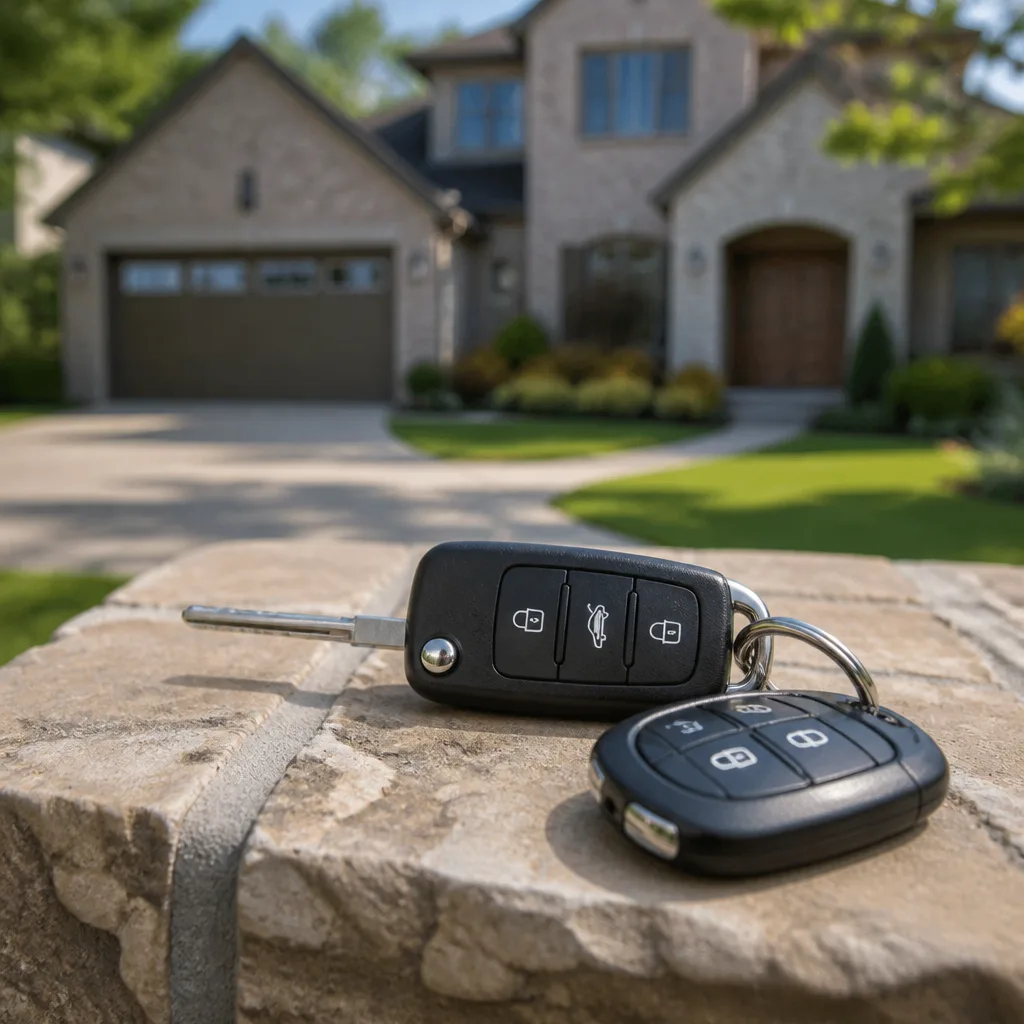 Car keys & fobs
Non-destructive entry first, always - and we re-key Schlage, Kwikset, and Baldwin locks on the spot while you watch
You get a price before we start. It does not change when we arrive. No surprises.
Get your free estimateChoosing the Right Locksmith Brand: A Buyer’s Guide for Grand Rapids
The Kwikset knob lock on your front door can have its key duplicated at any hardware store, by anyone, for roughly three dollars. That single fact reframes what a “lost key” actually means in Grand Rapids: not a temporary inconvenience, but a permanent security reset requirement. Most homeowners in this city select lock brands based on whatever was already installed when they moved in, not on what their actual security needs require. This guide walks through the real differences between lock brands, what restricted keyway systems actually do, and how to match hardware to the way you actually live. For more context, see our complete guide to locksmith services in Grand Rapids.
Quick Answer
The right lock brand for your Grand Rapids home depends on whether you need standard convenience or genuine key control. For most single-family homes, Schlage offers the best balance of durability and value, while Kwikset provides budget-friendly flexibility. Homeowners with higher security needs or previous key-sharing concerns should consider restricted systems like Medeco or Mul-T-Lock, which require authorized dealer credentials for key duplication.
Styles & brands we work with
Table of Contents
- The Brand Landscape: What Most Grand Rapids Homes Actually Have
- Restricted Keyway Systems: What Medeco, Mul-T-Lock, and Abloy Actually Provide
- Matching Lock Grade to Door Position: A Grand Rapids Reality Check
- The Smart Lock Landscape for Grand Rapids Homeowners
- A Decision Framework by Homeowner Profile
- Rekeying vs. Replacement: The Cost-Conscious Security Move
- Working With a Locksmith Who Knows the Brands
The Brand Landscape: What Most Grand Rapids Homes Actually Have
Walk through the neighborhoods of Eastown, Alger Heights, or Creston and you’ll find a consistent pattern: most homes built before 1990 have whatever lock hardware the original contractor purchased in bulk. That usually means one of three brands. Understanding what’s already on your door is the starting point for any security conversation.
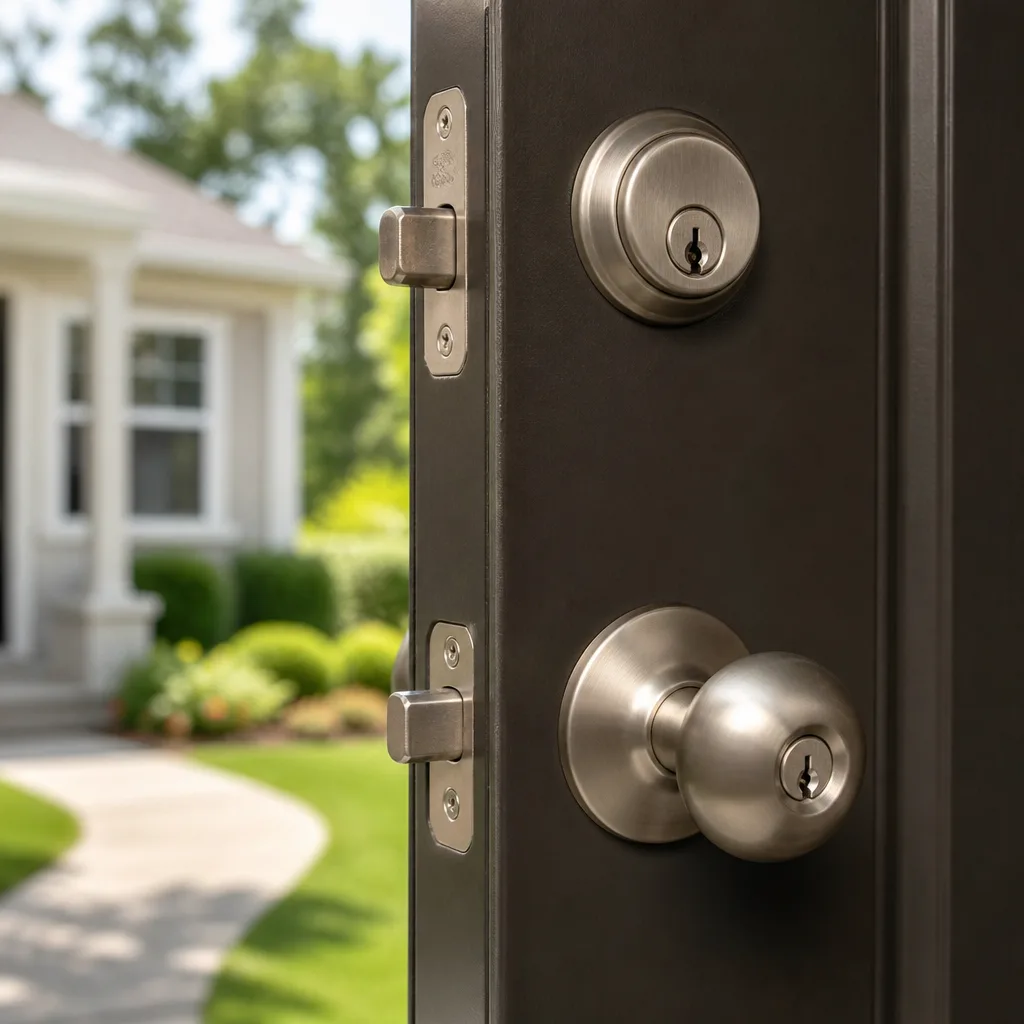
Kwikset is the most common residential lock brand in Grand Rapids, and it’s easy to see why. It’s affordable, widely available at every big-box store in Kent County, and perfectly adequate for basic locking functions. The Kwikset keyway is standard across millions of homes, which means any hardware store can cut a duplicate key in under two minutes. That convenience cuts both ways. The lock itself has a Grade 3 security rating on most models, which means it meets minimum residential standards but isn’t built to resist determined forced entry. The real limitation isn’t the mechanism; it’s the key control. Once you’ve handed a key to a contractor, a neighbor, or an ex-partner, you genuinely don’t know how many copies exist.
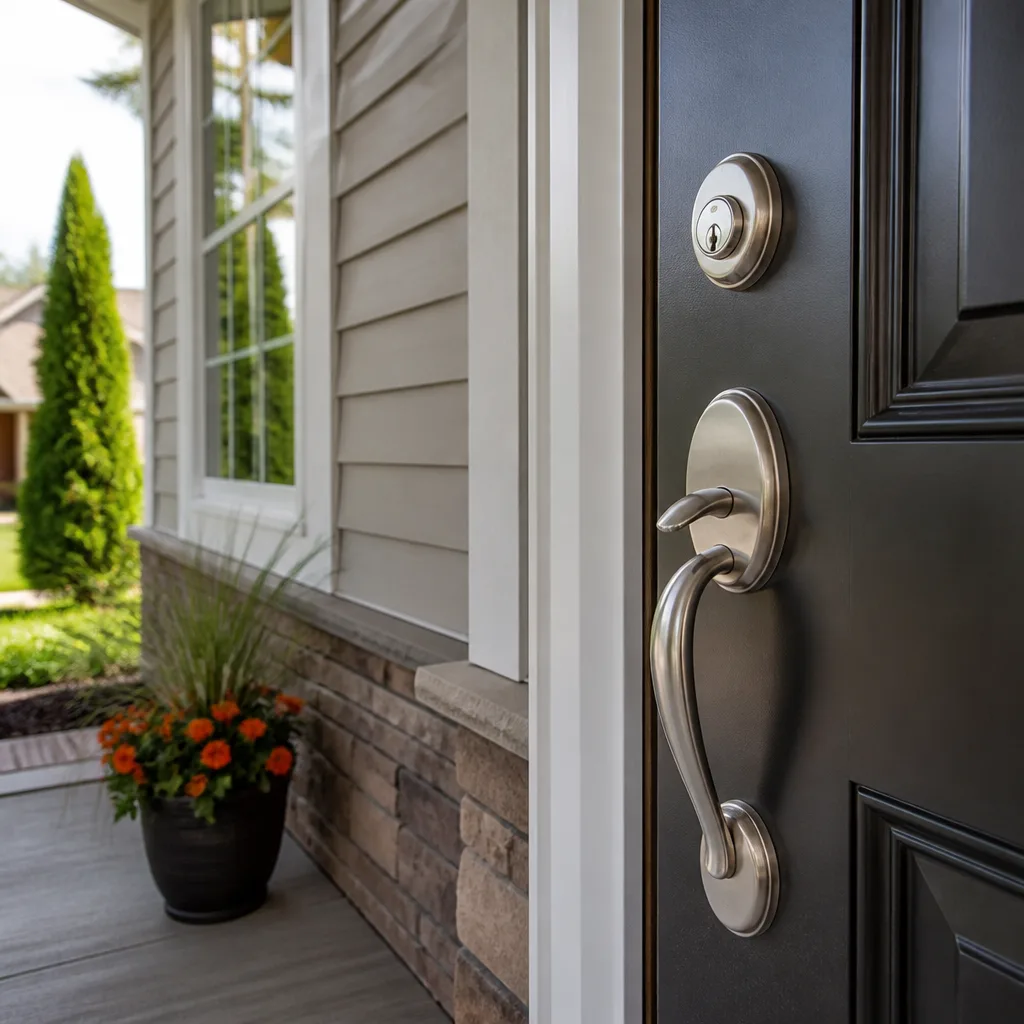
Schlage is the step up most Grand Rapids homeowners make when they replace a failing lock. Schlage deadbolts typically carry a Grade 2 or Grade 1 rating, meaning they’ve passed more rigorous durability and forced-entry testing. The pin-and-tumbler design has tighter tolerances than Kwikset, which makes the lock smoother to operate and slightly more resistant to bumping and picking. Schlage keys are still duplicable at hardware stores, but the brand’s higher construction quality means the lock itself will outlast the hardware-store key copies you’ll inevitably make. In our experience servicing Grand Rapids homes, a Schlage deadbolt on a solid wood or metal door is the single best baseline security upgrade for the money.
Baldwin occupies a different category entirely. These are architectural locks, often found in Heritage Hill homes and custom builds in Ada or Cascade. Baldwin hardware is built to premium standards with solid brass components and lifetime mechanical warranties on many models. The aesthetic range is significant; Baldwin offers dozens of finishes and designs that complement older Grand Rapids homes. But here’s the nuance Baldwin owners need to understand: the brand’s keyway on many models is still a standard pin-and-tumbler, which means the lock is beautiful and durable but doesn’t inherently provide better key control than a Schlage. You’re paying for construction quality and design, not restricted duplication. Our Reliance Lock & Key home service philosophy treats Baldwin as a hardware decision, not a key-control decision.
Restricted Keyway Systems: What Medeco, Mul-T-Lock, and Abloy Actually Provide
This is where the conversation moves from hardware to access governance. A restricted keyway system isn’t just a stronger lock. It’s a legal and mechanical framework that controls who can make keys, how many can exist, and what happens when one goes missing.
Medeco is the most recognized high-security brand in the United States, and for good reason. Medeco keys are protected by patent, which means only authorized Medeco dealers can cut them. When you purchase a Medeco system, you receive a key control card that must be presented before any duplication is permitted. No hardware store can make a copy. No locksmith without Medeco authorization can make a copy. You, as the owner, decide exactly how many keys exist for your property. For a Grand Rapids homeowner who has experienced a break-in or who simply wants certainty about who can access their home, Medeco represents the gold standard in key control. The locks themselves carry Grade 1 ratings and are engineered to resist picking, bumping, and drilling far beyond what a standard lock tolerates.
Mul-T-Lock takes a different mechanical approach with the same outcome. Their patented telescoping pin technology requires keys that interact with internal pins in multiple dimensions, not just along a single shear line. The result is a lock that’s exceptionally resistant to picking and bumping. Like Medeco, Mul-T-Lock keys are patented and can only be duplicated through authorized channels with proper documentation. For Grand Rapids property managers who rekey between tenants, Mul-T-Lock offers a compelling option: keys can be configured in hierarchical systems where a master key opens all units but individual tenant keys only open specific doors. That kind of access architecture simply doesn’t exist with consumer-grade hardware.
Abloy deserves mention even though it’s less common in residential Grand Rapids settings. Abloy’s Protec system uses a rotating disc mechanism instead of spring-loaded pins, which makes it functionally immune to conventional picking methods. The keys are protected by patent until 2031 on the Protec line. Abloy has a strong institutional presence; hospitals, universities, and government facilities select Abloy when failure simply isn’t an option. For a Grand Rapids homeowner with a high-value property or a security-sensitive situation, Abloy represents the ceiling of what residential lock hardware can achieve. The catch is cost and availability. These systems require specialized installation and are not carried by general locksmiths. Our team services Medeco, Abloy, and Mul-T-Lock systems across the Grand Rapids area, including restricted keyway installations that most local locksmiths refer away.
The honest summary: restricted keyway systems cost three to five times what a quality Schlage deadbolt costs. Whether that investment makes sense depends entirely on your exposure. A homeowner who’s never shared keys and lives on a quiet street in Breton Village probably doesn’t need Medeco. A homeowner who bought a house after years of tenant turnover, hosted contractors for a renovation, or experienced an unexplained entry? That’s the profile restricted systems were designed for.
Matching Lock Grade to Door Position: A Grand Rapids Reality Check
The American National Standards Institute grades locks on a scale: Grade 3 is minimum residential, Grade 2 is intermediate, Grade 1 is commercial-grade durability. Most Grand Rapids homeowners have never heard of these grades, and that’s precisely why they end up with a premium knob set on the front door while the back door has a Builder-grade deadbolt that would yield to a firm kick.
The Grand Rapids housing stock matters here. Homes built in the 1920s through 1950s (Alger Heights, East Grand Rapids) often have solid wood doors that have stood for decades. A Grade 2 deadbolt on those doors is genuinely effective because the frame is strong. Homes built during the 1980s and 1990s (much of Kentwood, Wyoming, and the suburban rings) frequently have hollow-core or lightweight doors with thinner frames. In those situations, the lock grade matters less than you’d think because the door itself is the weak point. A Grade 1 deadbolt on a hollow-core door is security theater.
Here’s the practical framework we use when advising Grand Rapids homeowners:
- Front door: Invest in a Grade 1 or Grade 2 Schlage or Baldwin deadbolt. This is the door most likely to be attacked because it’s the primary entry point. If your door is hollow-core, replacing the door is a higher priority than upgrading the lock.
- Back and side doors: These are the most common forced-entry points because they’re less visible from the street. A Grade 1 deadbolt here matters more than anywhere else. Schlage B660 or equivalent commercial-grade hardware is appropriate.
- Interior doors: Grade 3 is fine unless you’re securing a home office, gun safe room, or rental suite. In multi-unit Grand Rapids properties, interior locks deserve more thought because access control becomes a legal issue, not just a security one.
- Garage-to-house doors: Treat this as an exterior door. Many Grand Rapids homes have garages with side service doors that don’t even have deadbolts. That’s an invitation.
The “grade” itself is stamped on the lock packaging, but by the time you’re replacing a worn-out lock, the packaging is long gone. A locksmith can identify the lock model and its grade in seconds. The important principle is this: match your investment to the door’s actual structural integrity, not to which door faces the street. Our Emergency Locksmith in Grand Rapids service encounters the consequences of this mismatch more often than any other single issue.
The Smart Lock Landscape for Grand Rapids Homeowners
Smart locks generate the most questions we field, and the landscape has matured considerably in the last five years. The key insight for Grand Rapids homeowners: a smart lock is a convenience investment, not a security upgrade, unless it’s paired with appropriate backup hardware.
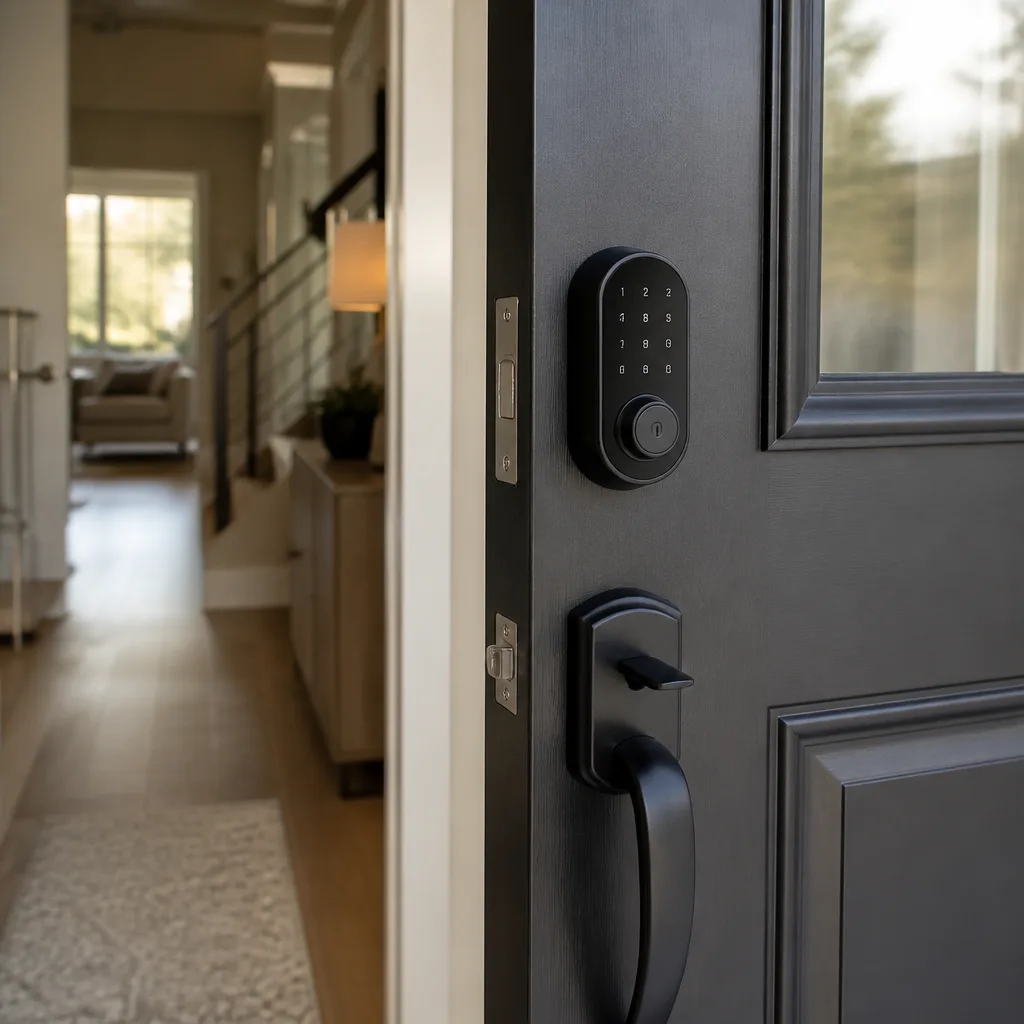
The platforms that integrate reliably in this market are straightforward. Schlage’s Encode series connects directly to Wi-Fi without a hub and works well with Amazon Key for secure package delivery, which matters in Grand Rapids neighborhoods with porch piracy concerns. The Yale Assure line offers the widest platform integration (Apple HomeKit, Google Home, Amazon Alexa, Airbnb for rental properties), which makes it the default choice for Grand Rapids landlords who manage properties remotely. Kwikset’s Halo and SmartCode lines provide budget-friendly smart options that pair with standard Kwikset rekeying, offering a useful feature for rental turnovers. Baldwin’s Evolved line brings smart capability to their architectural hardware, though at premium pricing.
What smart locks don’t do is change the key control equation on their own. Many smart locks still include a physical key override, and that keyway is typically standard Kwikset or Schlage, which means the hardware-store duplication problem persists. If you’re installing a smart lock as an access-management solution, you’re still vulnerable through the physical keyhole unless you’ve addressed the cylinder itself. For Grand Rapids homeowners deploying short-term rental properties, this is the often-overlooked gap: your digital access list updates instantly when a guest checks out, but the physical key you handed to a cleaner or a previous tenant remains viable indefinitely.
Michigan winters add a specific consideration. Smart lock battery life degrades measurably in cold weather. A lock that promised six months of battery life in March might die in February, right when you’re standing on a Grand Rapids porch in single-digit temperatures. If you install a smart lock, keep the physical key override functional and carry it. The electronic failure mode is real, and it happens disproportionately during the worst weeks of the year. We also recommend selecting models with backup power terminals or keypad-only options that can operate independently of the deadbolt mechanism.
Where electronic access genuinely makes sense in Grand Rapids: rental properties with frequent turnover, homes where teenagers come and go without keys, and situations where you need to grant temporary access to a contractor or dog walker. Where it adds risk without benefit: a secondary backup lock that rarely gets used, or a front door where the smart lock replaces rather than supplements a proper Grade 1 deadbolt. The right smart lock alongside a quality mechanical deadbolt is a strong setup. The smart lock alone is a convenience feature pretending to be security.
A Decision Framework by Homeowner Profile
Rather than a generic “it depends,” here’s a concrete decision framework organized by the profiles we actually encounter in Grand Rapids.
- Renter in an apartment or house: You likely don’t control the existing hardware. Your move-in day should include a request for rekeying if the landlord hasn’t done it; Michigan law doesn’t mandate rekeying between tenants, which means you genuinely don’t know who holds keys to your unit. If the landlord won’t rekey, a portable security solution like a door reinforcement plate and an interior brace is appropriate. The brand conversation mostly matters when your lease requires you to replace hardware or when you want a smart lock for convenience (with landlord approval).
- First-time homeowner in a standard single-family house: Replace the front and back door deadbolts with Schlage Grade 2 or Grade 1 hardware the first week you move in. Rekey every exterior lock so all use the same key. This is the “Rekey, don’t replace” moment; your existing locks may be perfectly functional, but you don’t know their key history. Our Rekey Locks in Grand Rapids service handles this for roughly a quarter of full hardware replacement cost.
- Homeowner with a high-value property or security-sensitive situation: Consider a restricted keyway system (Medeco or Mul-T-Lock) on all exterior doors. The key control benefit compounds over time; every key you hand out is tracked, and every key you don’t hand out simply can’t exist. A Grand Rapids homeowner storing firearms, operating a home business with valuable inventory, or recovering from a break-in is the typical profile for this investment.
- Landlord or property manager with multiple Grand Rapids units: A master key system with Mul-T-Lock or Sargent hardware solves the turnover problem permanently. Each tenant gets a key that opens only their unit and common areas. You get a master that opens everything. When a tenant moves out, you rekey a single cylinder rather than replacing hardware. The upfront cost is higher, but the operational cost drops significantly over multiple turnover cycles.
- Owner of an older Grand Rapids home with architectural hardware: Preserve the Baldwin aesthetic while upgrading the security cylinder. Many Baldwin lock bodies can accept restricted keyways, meaning you keep the visible hardware you love while gaining Medeco or Mul-T-Lock key control underneath. This is the “invisible upgrade” we recommend most often to Heritage Hill and East Grand Rapids homeowners.
Each profile leads to a specific hardware recommendation, not an open-ended consultation. That’s the difference between a security advisor and a parts installer.
Rekeying vs. Replacement: The Cost-Conscious Security Move
When a key goes missing or a tenant moves out, the default assumption is that you need new locks. That assumption costs Grand Rapids homeowners and landlords hundreds of dollars in unnecessary hardware purchases every year. See The Complete Car Key Replacement Guide for Grand Rapids Homeowners for related guidance on key management.
Rekeying is the process of changing the internal pins in a lock cylinder so that old keys no longer operate it. The lock itself remains in place; only the key changes. For standard hardware brands like Kwikset and Schlage, rekeying takes minutes per lock and costs a fraction of new hardware. The resulting security is identical to what you’d get from replacing the lock, because the vulnerability was never the lock body. It was the key’s distribution.
There are limits to this approach. Heavily worn locks, locks with internal damage, or locks where you want to upgrade to a higher grade or a restricted keyway should be replaced, not rekeyed. The physical condition of the mechanism matters. A 25-year-old Kwikset that’s been through two decades of Michigan weather cycles isn’t worth investing in rekeying; replace it with a Schlage and start fresh.
For Grand Rapids property managers, rekeying between tenants is the single highest-ROI security action you can take. It’s fast, it’s inexpensive, and it definitively closes the access gap left by every previous occupant. The ritual of key collection at move-out is nice, but key collection cannot account for copies the tenant made. Rekeying can.
Working With a Locksmith Who Knows the Brands
The locksmith you choose determines which brands are actually available to you. Most Grand Rapids locksmiths carry Kwikset and Schlage. Fewer service Baldwin and Yale. A small minority are authorized to sell and service Medeco, Mul-T-Lock, Abloy, and Sargent restricted systems. If your needs extend beyond the big-box brands, your locksmith’s credentials become the limiting factor, not the hardware itself.
Our service approach at Reliance Lock & Key reflects that reality. We maintain working knowledge across eight major lock manufacturers because a Grand Rapids homeowner shouldn’t be told to replace a high-security cylinder simply because the technician doesn’t recognize it. The full spectrum, from Kwikset to Medeco, represents the difference between a generalist who handles the common and a specialist who can solve the uncommon. We’ll tell you when a rekey makes more sense than a replacement, when a restricted keyway is worth the investment, and when your existing hardware is perfectly adequate but your key distribution is the problem.
For automotive key replacement, the same brand-fluency principle applies. Modern vehicle keys are transponder-equipped and require programming equipment that varies by manufacturer. Dealerships charge a premium for this service. Our Car Key Replacement in Grand Rapids service handles the same programming with locksmith-level speed and accessibility, getting Grand Rapids drivers back on the road faster than the dealership. The relevant brand question for vehicles isn’t about the lock brand; it’s about the compatibility of your key programming equipment with your specific vehicle make and model year.
Common Mistakes to Avoid
- Buying the lock at a big-box store and installing it yourself without checking the door’s structural condition. A Grade 1 deadbolt on a hollow-core door is a false sense of security. Check the door and frame first. Grand Rapids homes from the 1980s and 1990s often have frame issues that require attention before lock hardware matters.
- Upgrading the front door while ignoring the back door. Most forced entries in Grand Rapids happen at rear and side entries that are less visible from the street. Your investment should follow the most vulnerable door, not the most visible one.
- Handing out keys without tracking who has them. Every key you cannot account for is a key you must assume exists in the wrong hands. Rekeying is the only way to render unaccounted keys harmless.
- Installing a smart lock and discarding the physical key override. Michigan winters kill smart lock batteries. When the lock dies at 7 a.m. in February, you’ll want that physical key, and you’ll want to know it still works.
- Assuming all locksmiths can service all brands. Medeco, Mul-T-Lock, Abloy, and Sargent restricted systems require specific authorization. Asking a general locksmith to handle one of these systems is how keys get lost and systems get damaged.
- Replacing locks when rekeying would solve the problem. If the lock mechanism is sound and only the key distribution is uncertain, rekeying provides identical security at a quarter of the cost.
- Deferring lock upgrades after buying a Grand Rapids home. The first week of ownership is when you’re most vulnerable; previous owners, their family members, contractors, and real estate agents all potentially held keys. Rekey or upgrade before you move your belongings in.
When to Call a Professional
Some lock work is genuinely DIY-appropriate: tightening a loose handle, replacing a standard knob set, installing a visual-only security camera. Other situations demand professional credentials and experience. Our DIY vs Professional Locksmith guide breaks down exactly where that line falls. Call a locksmith when you need a restricted keyway system installed, when a lock has been attacked or picked, when you’re setting up a master key system for a multi-unit property, when a smart lock installation requires integration with existing hardware, or when a high-security cylinder needs servicing. Attempting restricted system work without authorization voids warranties and creates key control vulnerabilities. Reliance Lock & Key offers free estimates in Grand Rapids, call (855) 341-7491 to talk through your situation before spending money on hardware that might not solve your actual problem.
Frequently Asked Questions
For most single-family Grand Rapids homes, Schlage deadbolts offer the best balance of durability, security rating, and price. Replace both the front and back door deadbolts with Schlage Grade 2 or Grade 1 hardware and rekey them to a single key. If you need genuine key control, consider a restricted system like Medeco or Mul-T-Lock. Call (855) 341-7491 for a recommendation specific to your home’s construction and your security needs.
Yes, and you should. Most Grand Rapids homes have exterior locks from different manufacturers installed at different times, which means multiple keys on your ring. Rekeying brings all standard-brand locks (Kwikset, Schlage, Baldwin with standard keyways) to a single key. If you have locks from incompatible brands, a locksmith can advise whether rekeying or selective replacement is the better path.
Medeco and Mul-T-Lock keys are protected by active patents, which means only authorized dealers can duplicate them. You receive a key control card and decide exactly how many keys exist. The lock mechanisms also resist picking, bumping, and drilling far beyond standard hardware. For Grand Rapids homeowners with genuine key-control needs, this is the mechanical and legal protection that consumer brands cannot provide.
Smart locks function in cold weather but their battery life shortens significantly during Grand Rapids winter months. Choose a model with a physical key override and keep that key on your person. Expect to replace batteries more frequently than the manufacturer’s marketing materials suggest when temperatures stay below freezing for extended periods.
Lock grades are stamped on the packaging, which is rarely still around by the time you’re asking the question. A locksmith can identify your lock model and its ANSI grade by sight. Grade 1 is commercial-grade durability, Grade 2 is intermediate residential, and Grade 3 is minimum residential standard. If you don’t know what you have, the odds are high it’s Grade 3 because that’s what builders and big-box stores stock by default.
Yes. The security vulnerability in a lost or unaccounted key situation is the key itself, not the lock mechanism. Rekeying changes the internal pinning so old keys no longer operate the lock while keeping the existing hardware in place. If the lock is physically worn or damaged, replacement makes more sense. If the mechanism is sound, rekeying provides identical security at roughly a quarter of the cost.
The Bottom Line
Lock brand selection in Grand Rapids is a long-term decision about access control, not a hardware shopping trip. The three-tier reality is straightforward: Kwikset for budget-conscious baseline function, Schlage for the best value in durable residential security, and restricted systems like Medeco or Mul-T-Lock for genuine key control that no hardware store can circumvent. Match your lock grade to the structural integrity of each door, rekey whenever key distribution becomes uncertain, and understand that smart locks add convenience rather than fundamental security. When in doubt, talk to a locksmith who works across the full brand spectrum rather than one who only handles what’s on the shelf. Browse our more guides & resources for additional security advice. Call Reliance Lock & Key at (855) 341-7491 for a free estimate and a recommendation based on your specific property, not a generic sales script.
Written by the team at Reliance Lock & Key, serving Grand Rapids since 2016.